June 11, 2026
LeaseHub vs Buildium: which fits a lease-heavy operation?
By Alex Burton
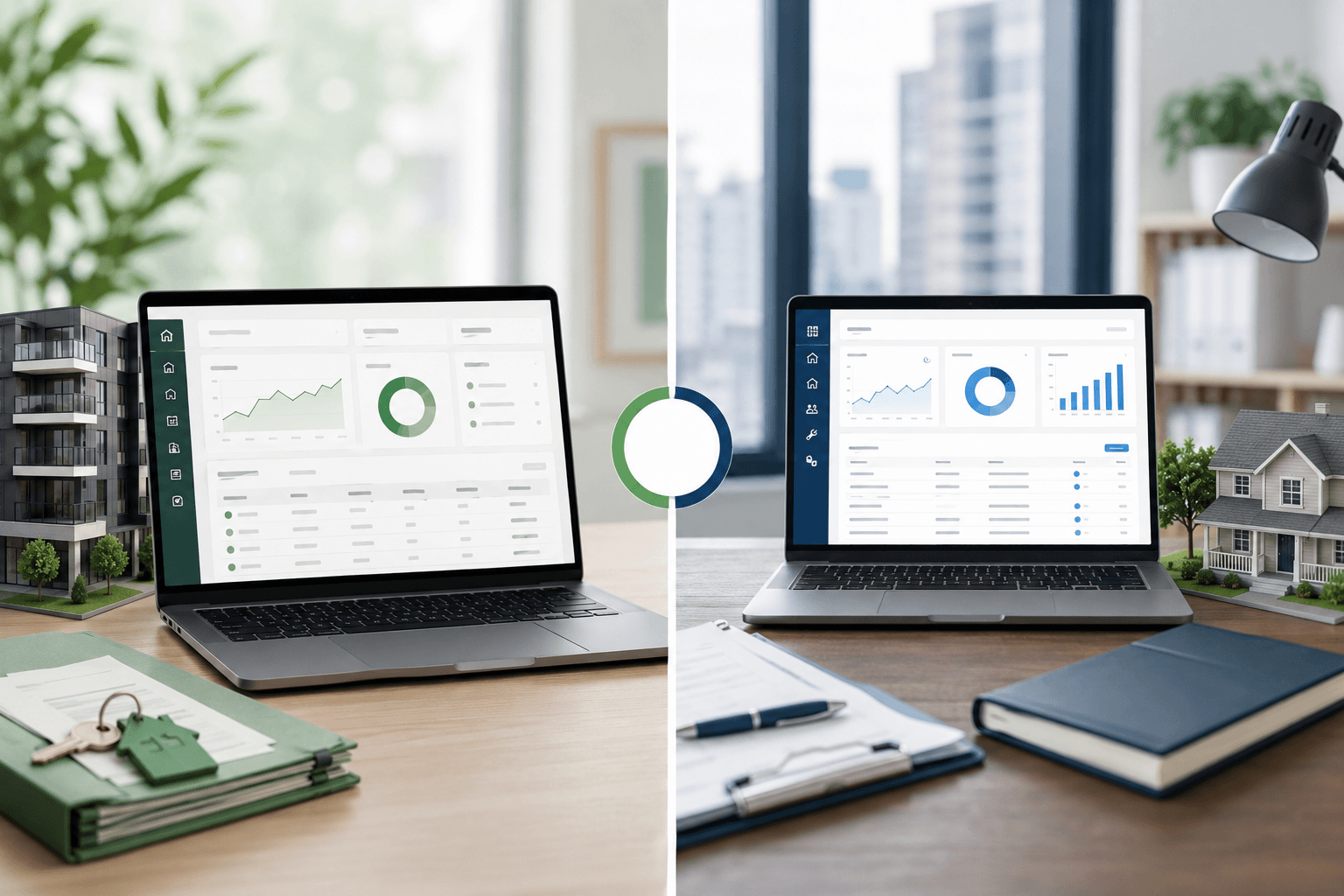
You manage 150 units. Half your week is leasing: scheduling tours, chasing applications, countersigning leases, pushing renewals. You do not need a general-purpose property management platform. You need one built around the leasing cycle itself.
Buildium is the name most property managers recognize first. It is well-established, reasonably priced for a mid-sized portfolio, and covers accounting, maintenance, and resident communications in a single system. But when the bulk of your workload lives between “lead comes in” and “lease signed,” Buildium’s architecture starts showing cracks.
LeaseHub was built specifically for that window. This comparison does not declare a universal winner. It maps out where each platform earns its keep, where it falls short, and which type of operator gets the most out of each.
What Buildium actually does well
Buildium is a comprehensive platform that has been on the market since 2004. It covers the full property management lifecycle: leasing, accounting, maintenance, resident communication, and owner reporting. For a manager whose daily workload is split across all of these functions, it is a coherent single-system option.
A few areas where Buildium stands out:
Accounting depth. Buildium’s financial tooling is strong. Rent collection, expense tracking, ledgers, owner distributions, and 1099 filing are all native. Forbes named it the best real estate accounting software for property managers, and the reputation is warranted for managers who want accounting and operations in one place.
Prospect-to-tenant flow. Buildium handles listing syndication, online applications, TransUnion tenant screening, e-lease signing, and move-in all within a single workflow. For a straightforward residential portfolio, this is genuinely smooth.
Maintenance management. Work orders, vendor assignment, cost tracking, and communication logs are built in. The Growth and Premium plans add project management and inspection tools.
Mobile access. The mobile app is functional and reliable, which matters for managers who are often on-site.
Where Buildium starts to strain is volume and complexity on the leasing side specifically. [FACT-CHECK: confirm current Buildium pricing tiers from buildium.com before publishing last known starting price was $62/month for the Essential plan.] Automation within the leasing workflow, particularly around showings coordination and deal-stage visibility, requires workarounds or third-party integrations that add friction.
Where lease-heavy operations hit Buildium’s ceiling
Property managers whose core work is leasing, not just property maintenance, tend to run into the same friction points with Buildium.
Showing coordination is manual. Buildium will sync your listings and collect inquiries, but coordinating showing times, confirming with agents, and managing cancellations still relies on email and phone. If you are running 40-plus showings a week across multiple properties, that is a significant time sink.
The deal pipeline is not visual. Buildium tracks applicants through statuses, but there is no deal board or pipeline view that shows you, at a glance, where every active opportunity sits. For a leasing-first operation, that visibility matters.
Renewal workflows require manual setup. Buildium flags upcoming expirations, but the renewal process, including negotiation, document generation, and e-signing, is not as streamlined as a dedicated leasing tool. Users have noted limitations on multiple renewal templates as a recurring frustration.
Agent coordination lacks a purpose-built hub. Third-party listing agents do not have a clean dashboard in Buildium. Tracking their activity, managing commissions, and coordinating invoice submission typically happens outside the platform.
These are not bugs in Buildium. They are the predictable result of a platform designed for broad property management coverage rather than leasing depth.
What LeaseHub was built to do
LeaseHub is a lease management platform designed specifically for the leasing cycle, from the moment a lead enters the funnel to the day a renewal is signed. It is built by Avaasa Inc., founded by Riddhi Shah, Alex Burton, and Stavya Bhatia, with backgrounds in AI, real estate, and software specifically chosen to solve this problem.
The platform is organized around the core surfaces a lease-heavy operation actually uses every day.
Showings automation
LeaseHub’s showings automation handles scheduling, confirmation, rescheduling, and agent coordination without manual back-and-forth. Tours get booked, confirmed, and tracked inside the platform. If you have ever watched a Tuesday afternoon block of showings fall apart because of double-bookings and missed confirmation texts, this is the part that fixes that.
Applications management
The applications dashboard gives you a centralized view of every active application, its status, and its documents. Applications flow in from multiple channels and land in one place, rather than scattered across inboxes.
Deals and lease management
This is where LeaseHub’s design philosophy separates it most clearly from Buildium. The deals and lease pipeline functions like a proper deal board: you see each opportunity, its stage, the associated documents, and what still needs to happen to get it to execution. For a leasing-first operation, this is the view you want open all day.
Renewals and subleasing
Renewals and subleasing are treated as first-class workflows rather than afterthoughts. Upcoming expirations surface automatically, renewal offers can be templated and sent from within the platform, and the negotiation and e-signing process stays inside a single system.
CRM and leads
Every prospect that comes in, whether from a listing site, a referral, or a direct inquiry, flows into the CRM and leads module. Follow-up sequences, lead status tracking, and outreach history are all connected to the deal pipeline downstream.
Agent hub
For operations that work with third-party leasing agents, the Agent Hub gives agents their own dashboard, commission tracking, and invoice submission workflow. This is a feature Buildium does not meaningfully replicate.
Side-by-side: LeaseHub vs Buildium on leasing workflows
| Feature | Buildium | LeaseHub |
|---|---|---|
| Listing syndication | Yes (major platforms) | Yes |
| Online applications | Yes | Yes |
| Tenant screening | Via TransUnion integration | Via Tenant Screening module |
| Showings automation | Manual / limited | Purpose-built, automated |
| Deal pipeline view | Status-based, no visual board | Visual deal board |
| Agent hub / commissions | Not native | Native Agent Hub |
| Renewal workflow | Basic flagging, limited templates | Dedicated workflow with templating |
| E-lease signing | Yes | Yes |
| Accounting | Full suite | Focused on leasing-side payments |
| Maintenance management | Yes | Outside core scope |
| Owner reporting | Yes | Limited |
| Buildium / YGL integration | Native | Integrates with Buildium |
One line worth pausing on: LeaseHub integrates with Buildium. That means some operations use both, with LeaseHub handling the front-end leasing workflow and Buildium managing the accounting and maintenance backend once a tenant is placed. If your operation has two distinct halves and Buildium is already embedded on the accounting side, that is worth knowing before you frame this as an either-or decision.
How to decide which one fits your operation
The right answer depends on what percentage of your week is leasing versus property management operations.
Choose Buildium if:
- You manage a mixed portfolio where accounting, maintenance, and leasing share roughly equal weight in your workload
- You have fewer than 20 units and want one affordable system that does everything adequately
- Your leasing volume is low enough that manual showing coordination is not a daily bottleneck
- You need robust owner reporting and financial tools built in
Choose LeaseHub if:
- The majority of your work lives between “lead comes in” and “lease signed”
- You coordinate 20-plus showings per week and the scheduling overhead is eating your team’s time
- You work with third-party listing agents and need a proper commission and invoicing workflow
- You want pipeline visibility across all active deals, not just a list of applicants in various statuses
- Renewals are a significant volume item and you want a structured workflow, not spreadsheet reminders
Consider using both if:
- You are a property management company with a dedicated leasing team and a separate operations or accounting team
- Your Buildium accounting setup is stable and you do not want to migrate financial data, but your leasing process needs structural improvement
The real question most operators do not ask
Most software comparisons focus on the feature checklist. The more useful question is: where in the workflow does my team spend the most time, and is the software I am using designed for that specific part?
Buildium was designed for the full property management lifecycle. It does that well. But if you run an operation where the leasing cycle, from first inquiry to signed lease, is the primary thing you are paid to execute, a platform built around that workflow will outperform a general-purpose tool every time.
The full feature overview for LeaseHub breaks out each surface in detail if you want to map specific workflows before a conversation.
A note on Buildium alternatives in the broader market
The “Buildium alternative” search has gotten crowded. AppFolio, DoorLoop, Rent Manager, and others all compete for the same broad property management buyer. Most of them are also designed for broad coverage, not leasing depth.
LeaseHub sits in a different category. It is not trying to replace Buildium as a full property management system. It is purpose-built for the leasing-heavy operation that needs more than Buildium’s leasing features can deliver, without being forced to rebuild its entire tech stack.
If that describes your situation, it is worth a direct conversation rather than another feature matrix comparison. Book a demo and walk through how your current leasing workflow would map to LeaseHub’s surfaces.
Frequently asked questions
Does LeaseHub replace Buildium entirely?
Not necessarily. LeaseHub handles the leasing cycle specifically: leads, showings, applications, deals, lease execution, and renewals. Buildium covers accounting, maintenance, and owner reporting more comprehensively. Some operations run both in tandem, using LeaseHub’s Buildium integration to connect the leasing front-end with Buildium’s accounting backend.
What does Buildium cost?
[FACT-CHECK: confirm current pricing from buildium.com last known pricing was $62/month for the Essential plan, with Growth and Premium tiers above that.]
Is LeaseHub a good fit for listing agents, not just property managers?
Yes. The Agent Hub is specifically designed for listing agents who need their own dashboard, deal visibility, and commission tracking without relying on a property manager to relay information.
Can I migrate from Buildium to LeaseHub?
If you are considering a full migration, that is a conversation best had with LeaseHub’s team directly. For operations that want to add LeaseHub’s leasing workflow on top of an existing Buildium setup, the integration is already built.
What types of portfolios is LeaseHub designed for?
LeaseHub works for residential property managers, landlords running higher-volume portfolios, and listing agents. It is particularly well-suited for operations where leasing velocity, not property maintenance complexity, is the primary operational challenge.
Ready to see how LeaseHub maps to your leasing workflow? Book a demo and we’ll walk through your specific setup.